
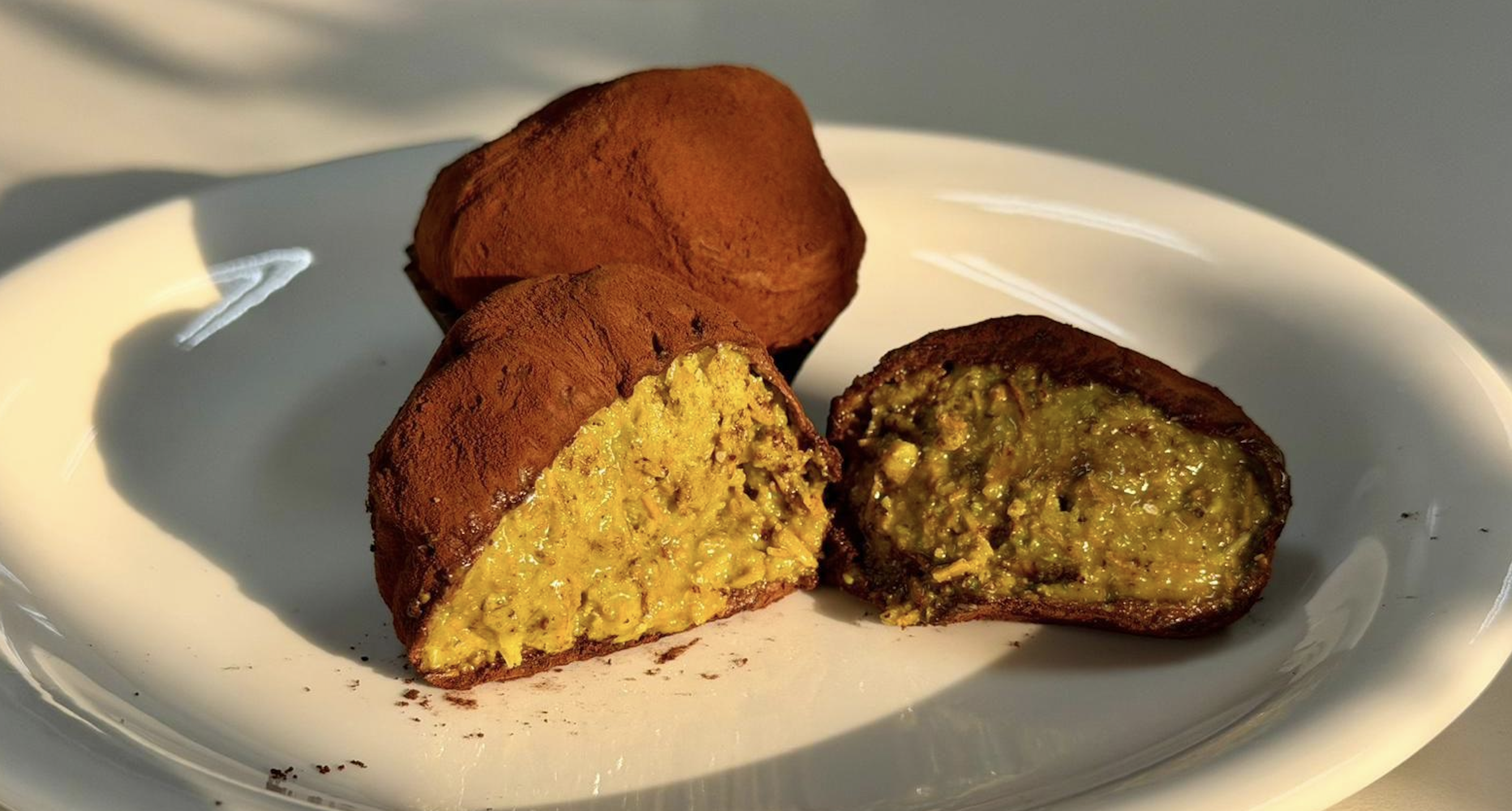

Dubai chewey cookie, made by combining pistachio paste with kadaif. January 2026
Korea’s latest craze, the Dubai chewy cookie, is more than just a sweet confection filled with the iconic knafeh pistachio filling–it symbolizes economic hardship and a growing self-employment crisis.
Consumers, particularly the youth, are indulging in this small luxury that appears to offer a premium experience at a relatively low price. With the dollar’s power making international travel financially burdening, many have turned to the cookie as a source of vicarious satisfaction. This creates a “lipstick effect” where consumers reduce big-ticket spending during economic downturns and increase spending on more affordable products such as lipstick, encouraging the sense of achievement in obtaining high-demand and low-supply items.
Many self-employed workers, including sushi shops, stew restaurants, and even hardware stores have begun selling the cookie to attract customers despite being unrelated to their main business. This strategy is largely due to prolonged inflation, the weakness of the Korean won, high interest rates, and rising labor costs that have made it difficult to maintain operations. However, the surge in prices of ingredients, along with packaging and labor costs tends to deepen losses with sales.
In Korea, pistachio import prices have risen from 6,800 won to 12,700 won per kilogram in January, a near 50 percent increase from the year prior. Furthermore, minimum wage has increased by more than 4 percent on average after 2018, now standing at 10,320 won per hour.
Some business owners have turned to kiosks, ordering tablets, or serving robots in an effort to cut labor costs, only to face steeper consequences for breaking a contract. For instance, when a grilled fish owner in Yongin failed business and closed the shop after two years, they had to pay a 7.2 million won early termination fee.
However, this short-lived obsession also reflects Korea’s “bbali bbali,” or “hurry hurry” culture, along with the desire for novelty in a period of economic slowdown. Constantly changing food trends allows people to cut expenses on luxuries and invest money into trending food or cafés. People tend to try something once and move on, while businesses respond by crafting new menus to attract customers. In areas such as Seoul where cafe culture is widespread and competition is high, many resort to following existing trends to face rising costs. This repetition of trends makes new items burn out faster, constantly creating space for new ones.
Following the Dubai chewy cookie craze, there has been a number of news trends that only lasted for short periods of time: frozen jelly, butter dduk, and bomdong bibimbap, which all tend to end within a month.
Korea’s rapidly changing food scene is not just for visual appeal, but a reflection of the struggle of both consumers and businesses during an economic downturn as a source of novelty to encourage consumer investment.
Leave a Reply